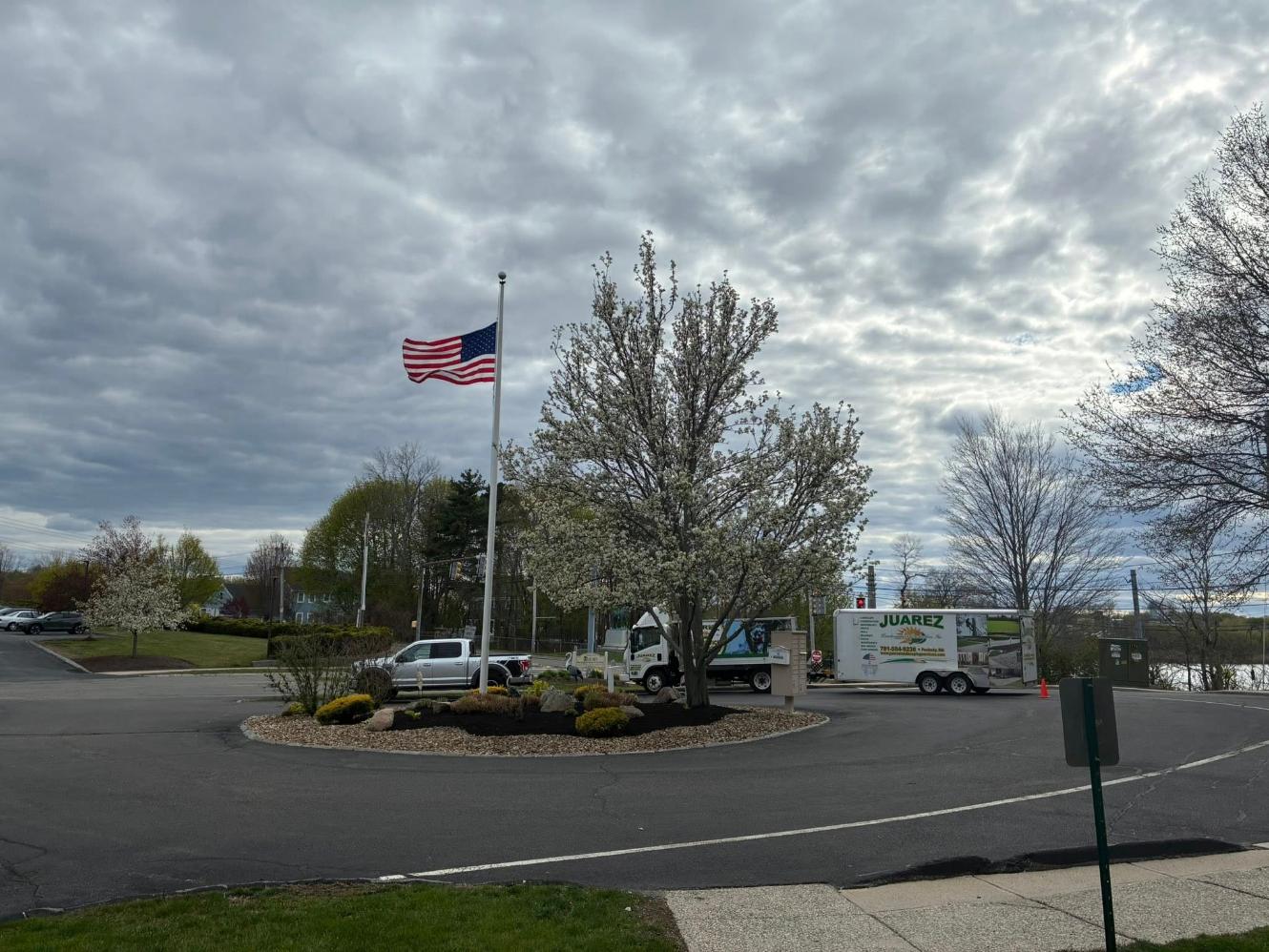
The entrance shown in this project demonstrates how landscape bed design can organize an outdoor space without making it feel overly complicated. A combination of dark mulch, stone edging, shrubs, ornamental plants, and a central tree creates a defined planting area alongside the driveway. For homeowners looking to improve an existing yard, this type of layout offers a practical way to give planting beds clearer boundaries while keeping the surrounding lawn and paved areas visually separated.
How Landscape Bed Design Creates Cleaner Property Lines
A planting bed can easily look unfinished when lawn, mulch, and plants blend together without a clear transition. In this project, the stone border establishes a distinct line between the lawn and the landscaped area.
This approach makes routine maintenance more manageable because the edge provides a visible boundary for mowing and bed care. It can also give the property entrance a more structured appearance without requiring extensive hardscape construction.
Professional Landscaping can help determine where planting beds should begin and end based on the existing driveway, walkways, lawn, trees, and available planting space.
Combining Mulch With Stone Edging
Mulch and stone edging serve different purposes within a landscape bed. Mulch covers exposed soil around plants and helps create a consistent surface throughout the bed. Stone edging, meanwhile, provides the visual separation that keeps the mulch contained within the designated area.
The image shows how contrasting colors can make the design easier to define. Dark mulch sits against light-colored stone, while green shrubs and lawn provide additional contrast. The result is a layered appearance that does not depend on a large number of decorative features.
When refreshing an existing bed, the edging material, mulch color, and surrounding landscape should be considered together rather than selected independently.
Choosing Plants for a Structured Landscape Bed
Plant selection has a major influence on how a landscaped entrance looks throughout the year. The project pictured here uses shrubs and smaller plants around an established tree, creating different heights and textures within the same bed.
A useful planting arrangement generally considers the mature size of each plant rather than only its appearance when newly installed. Leaving appropriate space between plants can reduce crowding as they grow and make future maintenance easier.
Evergreen shrubs can provide structure, while flowering plants or seasonal foliage can add variation. The specific choices should also account for available sunlight, soil conditions, drainage, and the amount of maintenance the property owner wants to perform.
Creating a Landscape Bed Around an Existing Tree
The mature tree in this project acts as a natural focal point for the planting area. Instead of competing with it, the surrounding bed uses lower-growing shrubs and ground-level materials to frame the tree.
When designing around an established tree, it is important to avoid unnecessarily disturbing the root zone. Plants should be positioned thoughtfully, and mulch should not be piled directly against the trunk. Maintaining an appropriate transition around the tree can help preserve the clean appearance of the bed while accommodating the existing landscape.
This type of design is particularly useful when updating an older property where mature trees are already part of the yard.
Landscape Bed Design for Driveway and Entry Areas
Driveway edges and property entrances are highly visible areas, making them practical locations for a focused landscaping improvement. Rather than redesigning an entire yard, a homeowner can concentrate attention on the spaces visitors see first.
A defined bed beside the driveway can soften large areas of pavement and introduce natural textures without interfering with vehicle access. Stone borders can also help maintain a consistent separation between the planting area and lawn.
For properties with established trees and existing shrubs, updating the bed layout, edging, and mulch can create a noticeably different appearance while retaining many of the landscape’s original features.
Maintaining the Finished Landscape Bed
Good design should make ongoing maintenance easier, not more complicated. Regular bed cleanup, selective shrub trimming, weed control, and periodic mulch renewal can help preserve the intended structure.
The lawn should also be maintained along the outside edge of the border so grass does not gradually grow into the planting area. Shrubs may need occasional shaping as they mature, while the tree should be evaluated separately for appropriate care.
Juarez Landscaping and Tree Services can incorporate Landscaping into a broader property maintenance plan when a project involves both planting beds and established trees.
FAQ
What is landscape bed design?
Landscape bed design is the planning and arrangement of planting areas using elements such as shrubs, trees, mulch, edging, and other landscape materials. The goal is to create organized transitions between lawns, driveways, walkways, and planting spaces.
Why use stone edging around a mulch bed?
Stone edging creates a defined border between the planting bed and surrounding lawn or pavement. It can make the layout easier to maintain while giving the landscape a more structured appearance.
Can a landscape bed be designed around an existing tree?
Yes. Existing trees can serve as focal points within a planting bed. Plant placement, available space, and protection of the tree’s root area should be considered when developing the design.
How often should mulch be refreshed?
Mulch generally needs periodic attention as it breaks down, shifts, or becomes mixed with surrounding soil. The appropriate refresh schedule depends on the mulch material, weather, and condition of the existing bed.
Who can help with landscape bed design?
Juarez Landscaping and Tree Services provides professional Landscaping services for outdoor spaces where planting beds, shrubs, trees, mulch, and property borders need to work together as one design.



The entrance shown in this project demonstrates how landscape bed design can organize an outdoor space without making it feel overly complicated. A combination of dark mulch, stone edging, shrubs, ornamental plants, and a central tree creates a defined planting area alongside the driveway. For homeowners looking to improve an existing yard, this type of layout offers a practical way to give planting beds clearer boundaries while keeping the surrounding lawn and paved areas visually separated.
How Landscape Bed Design Creates Cleaner Property Lines
A planting bed can easily look unfinished when lawn, mulch, and plants blend together without a clear transition. In this project, the stone border establishes a distinct line between the lawn and the landscaped area.
This approach makes routine maintenance more manageable because the edge provides a visible boundary for mowing and bed care. It can also give the property entrance a more structured appearance without requiring extensive hardscape construction.
Professional Landscaping can help determine where planting beds should begin and end based on the existing driveway, walkways, lawn, trees, and available planting space.
Combining Mulch With Stone Edging
Mulch and stone edging serve different purposes within a landscape bed. Mulch covers exposed soil around plants and helps create a consistent surface throughout the bed. Stone edging, meanwhile, provides the visual separation that keeps the mulch contained within the designated area.
The image shows how contrasting colors can make the design easier to define. Dark mulch sits against light-colored stone, while green shrubs and lawn provide additional contrast. The result is a layered appearance that does not depend on a large number of decorative features.
When refreshing an existing bed, the edging material, mulch color, and surrounding landscape should be considered together rather than selected independently.
Choosing Plants for a Structured Landscape Bed
Plant selection has a major influence on how a landscaped entrance looks throughout the year. The project pictured here uses shrubs and smaller plants around an established tree, creating different heights and textures within the same bed.
A useful planting arrangement generally considers the mature size of each plant rather than only its appearance when newly installed. Leaving appropriate space between plants can reduce crowding as they grow and make future maintenance easier.
Evergreen shrubs can provide structure, while flowering plants or seasonal foliage can add variation. The specific choices should also account for available sunlight, soil conditions, drainage, and the amount of maintenance the property owner wants to perform.
Creating a Landscape Bed Around an Existing Tree
The mature tree in this project acts as a natural focal point for the planting area. Instead of competing with it, the surrounding bed uses lower-growing shrubs and ground-level materials to frame the tree.
When designing around an established tree, it is important to avoid unnecessarily disturbing the root zone. Plants should be positioned thoughtfully, and mulch should not be piled directly against the trunk. Maintaining an appropriate transition around the tree can help preserve the clean appearance of the bed while accommodating the existing landscape.
This type of design is particularly useful when updating an older property where mature trees are already part of the yard.
Landscape Bed Design for Driveway and Entry Areas
Driveway edges and property entrances are highly visible areas, making them practical locations for a focused landscaping improvement. Rather than redesigning an entire yard, a homeowner can concentrate attention on the spaces visitors see first.
A defined bed beside the driveway can soften large areas of pavement and introduce natural textures without interfering with vehicle access. Stone borders can also help maintain a consistent separation between the planting area and lawn.
For properties with established trees and existing shrubs, updating the bed layout, edging, and mulch can create a noticeably different appearance while retaining many of the landscape’s original features.
Maintaining the Finished Landscape Bed
Good design should make ongoing maintenance easier, not more complicated. Regular bed cleanup, selective shrub trimming, weed control, and periodic mulch renewal can help preserve the intended structure.
The lawn should also be maintained along the outside edge of the border so grass does not gradually grow into the planting area. Shrubs may need occasional shaping as they mature, while the tree should be evaluated separately for appropriate care.
Juarez Landscaping and Tree Services can incorporate Landscaping into a broader property maintenance plan when a project involves both planting beds and established trees.
FAQ
What is landscape bed design?
Landscape bed design is the planning and arrangement of planting areas using elements such as shrubs, trees, mulch, edging, and other landscape materials. The goal is to create organized transitions between lawns, driveways, walkways, and planting spaces.
Why use stone edging around a mulch bed?
Stone edging creates a defined border between the planting bed and surrounding lawn or pavement. It can make the layout easier to maintain while giving the landscape a more structured appearance.
Can a landscape bed be designed around an existing tree?
Yes. Existing trees can serve as focal points within a planting bed. Plant placement, available space, and protection of the tree’s root area should be considered when developing the design.
How often should mulch be refreshed?
Mulch generally needs periodic attention as it breaks down, shifts, or becomes mixed with surrounding soil. The appropriate refresh schedule depends on the mulch material, weather, and condition of the existing bed.
Who can help with landscape bed design?
Juarez Landscaping and Tree Services provides professional Landscaping services for outdoor spaces where planting beds, shrubs, trees, mulch, and property borders need to work together as one design.
A well-maintained landscape bed can make a major difference in how a…
Read MoreCommercial properties often make their first impression through the condition of their…
Read MoreThe entrance shown in this project demonstrates how landscape bed design can…
Read MoreEvery successful tree service project begins long before a climber leaves the…
Read MoreModern tree removal equipment has transformed the way professional contractors remove trees…
Read MoreLarge trees add beauty, shade, and value to any property, but maintaining…
Read MoreMaintaining a lush, attractive lawn requires more than simply cutting the grass.…
Read MoreRemoving large trees is one of the most challenging tasks in the…
Read MoreTree climbing techniques play a critical role in completing safe, efficient, and…
Read MoreA well-maintained landscape bed can dramatically improve the appearance of any property…
Read More