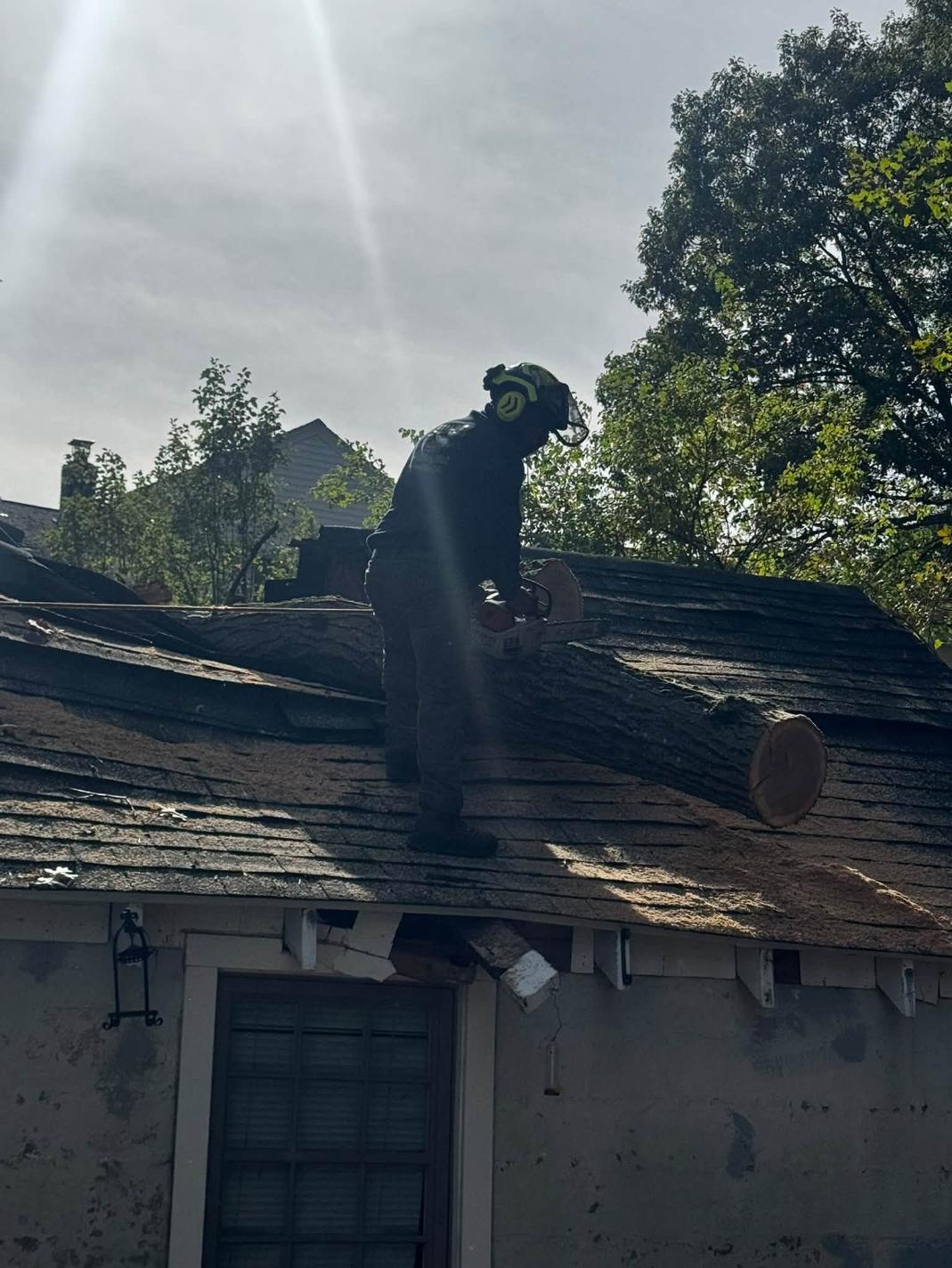
A fallen tree limb on your roof requires careful handling. Knowing what to do before cleanup begins can help protect your home’s structure, roofing materials, and surrounding property.
When a heavy tree limb falls onto a residential roof, the damage may extend beyond the visible branch. The impact can affect shingles, gutters, flashing, and underlying roof components. Attempting to pull or cut the limb without proper equipment can make the situation more dangerous.
For homeowners in Peabody, MA, and nearby communities, professional tree limb removal from a roof should begin with a safety assessment and a controlled removal plan.
Important Safety Reminder
Never climb onto a roof to remove a fallen limb yourself. Branches can be under tension, and the roof may already be structurally damaged. Keep people away from the affected area and contact a qualified tree service.
1. Assess the Situation from a Safe Distance
Before arranging tree removal, look at the affected area from the ground. Check whether the branch is resting directly on the roof, hanging over an edge, or connected to a larger damaged section of the tree.
- Look for visibly damaged shingles or gutters.
- Check for broken branches still hanging above the property.
- Notice any ceiling leaks or visible structural changes from inside the house.
- Keep children, pets, and visitors away from the affected area.
- Stay away from electrical wires or branches touching utility lines.
If a branch is touching a power line, do not approach it or attempt removal. Contact the utility company and follow its safety instructions.
2. Avoid Pulling or Cutting the Fallen Limb
A tree limb resting on a roof may be supporting part of its own weight against the structure. Moving it without understanding the pressure points can cause sudden movement, additional roof damage, or serious injuries.
Homeowners should avoid:
- Pulling the limb with a rope or vehicle.
- Using a chainsaw while standing on the roof.
- Walking underneath unstable hanging branches.
- Moving heavy tree sections without appropriate lifting equipment.
A trained tree removal crew can evaluate the branch position and plan how to lower or remove the wood in manageable sections.
3. Understand How Professional Roof Limb Removal Works
Safe tree limb removal from a roof involves more than cutting the visible wood. The crew needs to consider the roof’s condition, the branch’s weight, the surrounding tree structure, and the available access points.
01 — Initial Assessment
Evaluate the fallen limb, roof contact points, nearby trees, access conditions, and potential hazards.
02 — Removal Planning
Determine the suitable equipment, controlled cutting sequence, and safe direction for lowering the wood.
03 — Controlled Removal
Remove the damaged tree section in a planned manner to limit unnecessary pressure on the roof.
04 — Cleanup and Follow-Up
Clear the remaining tree debris and allow the homeowner to arrange a separate roof inspection if needed.
4. Check the Roof After the Tree Limb Is Removed
Removing the branch does not automatically mean the roof is undamaged. A heavy limb can crack shingles, loosen roofing materials, damage flashing, or affect the roof deck.
After the tree work is complete, consider having a qualified roofing contractor inspect:
- Missing, cracked, or lifted shingles.
- Damaged roof edges and gutters.
- Flashing around roof penetrations.
- Signs of water intrusion or ceiling damage.
- Any visible impact damage to the roof surface.
Document visible damage from a safe location and contact your homeowner’s insurance provider when appropriate.
5. When Should You Call an Emergency Tree Service?
Some situations require immediate professional attention rather than routine tree cleanup. Contact an emergency tree service when a large limb is resting on the roof, additional branches are unstable, or the damaged tree threatens nearby structures.
Juarez Landscaping and Tree Services provides tree care and emergency tree services for residential properties. Visit our Emergency Tree Services page to learn more about handling hazardous tree situations.
Need Tree Removal Assistance?
Protect your property with a properly planned tree removal process. Explore our Tree Removal Services for residential tree care solutions.
Call Juarez Landscaping and Tree Services: (781) 912-3220
Frequently Asked Questions
Can I remove a tree limb that is resting on my roof myself?
It is not recommended. The branch may be under pressure, and the roof may be damaged. A professional tree crew can assess the situation and plan a safer removal process.
Does tree limb removal include roof repairs?
Tree removal and roof repair are different services. After the branch is removed, a qualified roofing contractor should inspect the affected roofing materials and determine whether repairs are necessary.
What should I do if a tree branch lands on my roof during a storm?
Keep everyone away from the affected area, avoid climbing onto the roof, and stay clear of damaged utility lines. Contact an appropriate emergency tree service and arrange a roof inspection after the limb is removed.
Can a fallen tree limb damage shingles without creating a visible hole?
Yes. Heavy branches can crack, loosen, or displace shingles without creating an obvious opening. A roof inspection can help identify damage that is not visible from the ground.


A fallen tree limb on your roof requires careful handling. Knowing what to do before cleanup begins can help protect your home’s structure, roofing materials, and surrounding property.
When a heavy tree limb falls onto a residential roof, the damage may extend beyond the visible branch. The impact can affect shingles, gutters, flashing, and underlying roof components. Attempting to pull or cut the limb without proper equipment can make the situation more dangerous.
For homeowners in Peabody, MA, and nearby communities, professional tree limb removal from a roof should begin with a safety assessment and a controlled removal plan.
Never climb onto a roof to remove a fallen limb yourself. Branches can be under tension, and the roof may already be structurally damaged. Keep people away from the affected area and contact a qualified tree service.
1. Assess the Situation from a Safe Distance
Before arranging tree removal, look at the affected area from the ground. Check whether the branch is resting directly on the roof, hanging over an edge, or connected to a larger damaged section of the tree.
If a branch is touching a power line, do not approach it or attempt removal. Contact the utility company and follow its safety instructions.
2. Avoid Pulling or Cutting the Fallen Limb
A tree limb resting on a roof may be supporting part of its own weight against the structure. Moving it without understanding the pressure points can cause sudden movement, additional roof damage, or serious injuries.
Homeowners should avoid:
A trained tree removal crew can evaluate the branch position and plan how to lower or remove the wood in manageable sections.
3. Understand How Professional Roof Limb Removal Works
Safe tree limb removal from a roof involves more than cutting the visible wood. The crew needs to consider the roof’s condition, the branch’s weight, the surrounding tree structure, and the available access points.
01 — Initial Assessment
Evaluate the fallen limb, roof contact points, nearby trees, access conditions, and potential hazards.
02 — Removal Planning
Determine the suitable equipment, controlled cutting sequence, and safe direction for lowering the wood.
03 — Controlled Removal
Remove the damaged tree section in a planned manner to limit unnecessary pressure on the roof.
04 — Cleanup and Follow-Up
Clear the remaining tree debris and allow the homeowner to arrange a separate roof inspection if needed.
4. Check the Roof After the Tree Limb Is Removed
Removing the branch does not automatically mean the roof is undamaged. A heavy limb can crack shingles, loosen roofing materials, damage flashing, or affect the roof deck.
After the tree work is complete, consider having a qualified roofing contractor inspect:
Document visible damage from a safe location and contact your homeowner’s insurance provider when appropriate.
5. When Should You Call an Emergency Tree Service?
Some situations require immediate professional attention rather than routine tree cleanup. Contact an emergency tree service when a large limb is resting on the roof, additional branches are unstable, or the damaged tree threatens nearby structures.
Juarez Landscaping and Tree Services provides tree care and emergency tree services for residential properties. Visit our Emergency Tree Services page to learn more about handling hazardous tree situations.
Need Tree Removal Assistance?
Protect your property with a properly planned tree removal process. Explore our Tree Removal Services for residential tree care solutions.
Call Juarez Landscaping and Tree Services: (781) 912-3220
Frequently Asked Questions
Can I remove a tree limb that is resting on my roof myself?
It is not recommended. The branch may be under pressure, and the roof may be damaged. A professional tree crew can assess the situation and plan a safer removal process.
Does tree limb removal include roof repairs?
Tree removal and roof repair are different services. After the branch is removed, a qualified roofing contractor should inspect the affected roofing materials and determine whether repairs are necessary.
What should I do if a tree branch lands on my roof during a storm?
Keep everyone away from the affected area, avoid climbing onto the roof, and stay clear of damaged utility lines. Contact an appropriate emergency tree service and arrange a roof inspection after the limb is removed.
Can a fallen tree limb damage shingles without creating a visible hole?
Yes. Heavy branches can crack, loosen, or displace shingles without creating an obvious opening. A roof inspection can help identify damage that is not visible from the ground.
For trusted tree care, visit Juarez Landscaping and Tree Services and explore solutions for maintaining a safer residential property.
A well-maintained stone border creates a clear separation between lawn areas and…
Read MoreA fallen tree limb on your roof requires careful handling. Knowing what…
Read MoreRed mulch around trees can give a residential landscape a strong, finished…
Read MoreA mulch bed along a fence can turn a plain boundary into…
Read MoreWood fence installation around trees needs more planning than a straight fence…
Read MoreA well-maintained landscape bed can make a major difference in how a…
Read MoreCommercial properties often make their first impression through the condition of their…
Read MoreThe entrance shown in this project demonstrates how landscape bed design can…
Read MoreEvery successful tree service project begins long before a climber leaves the…
Read MoreModern tree removal equipment has transformed the way professional contractors remove trees…
Read More